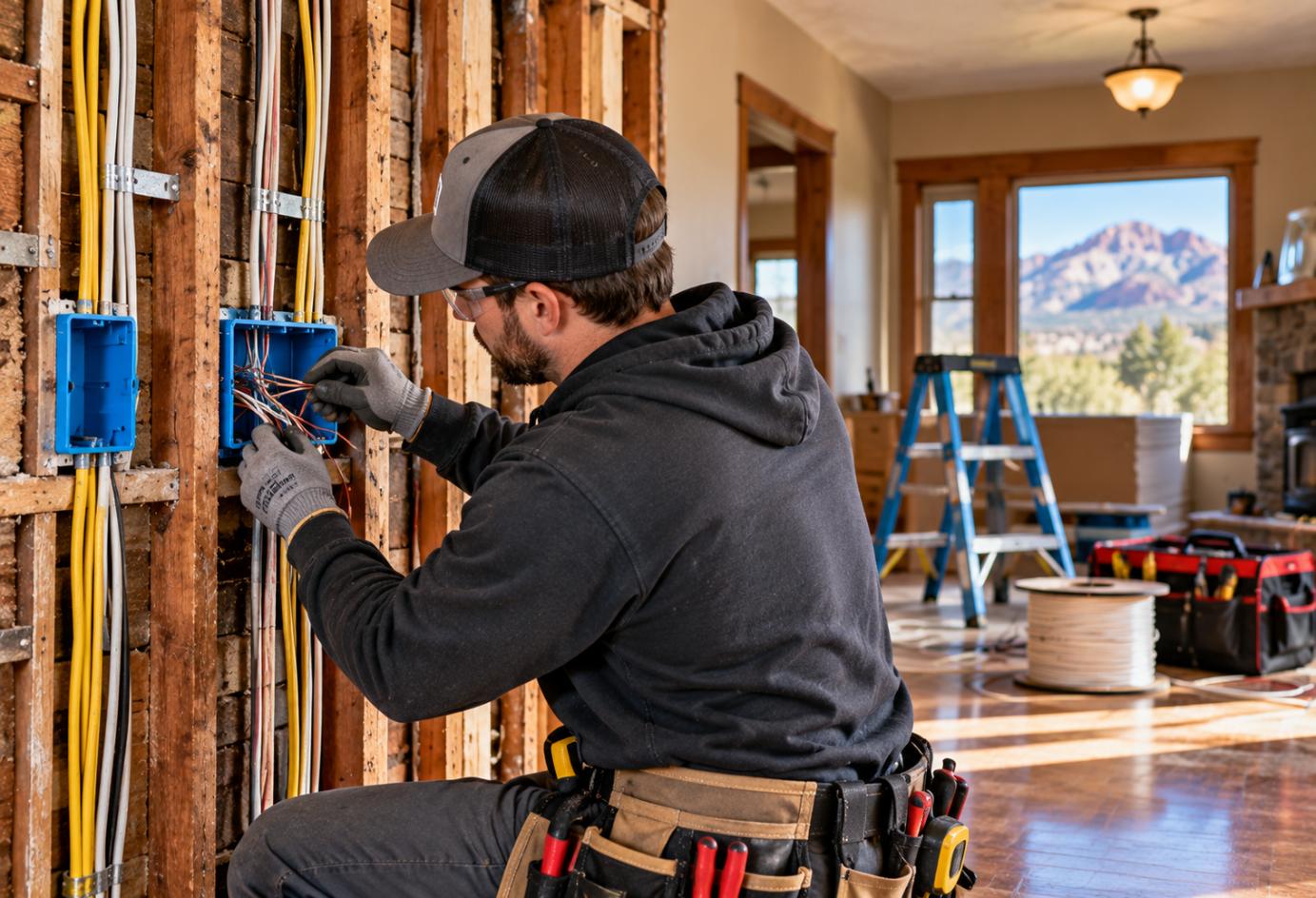
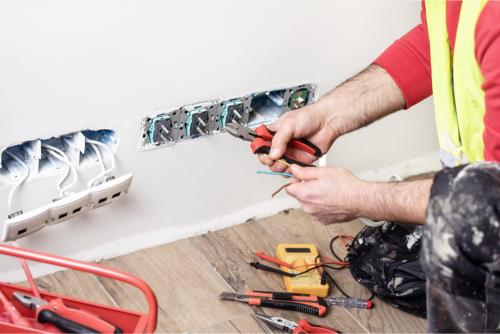
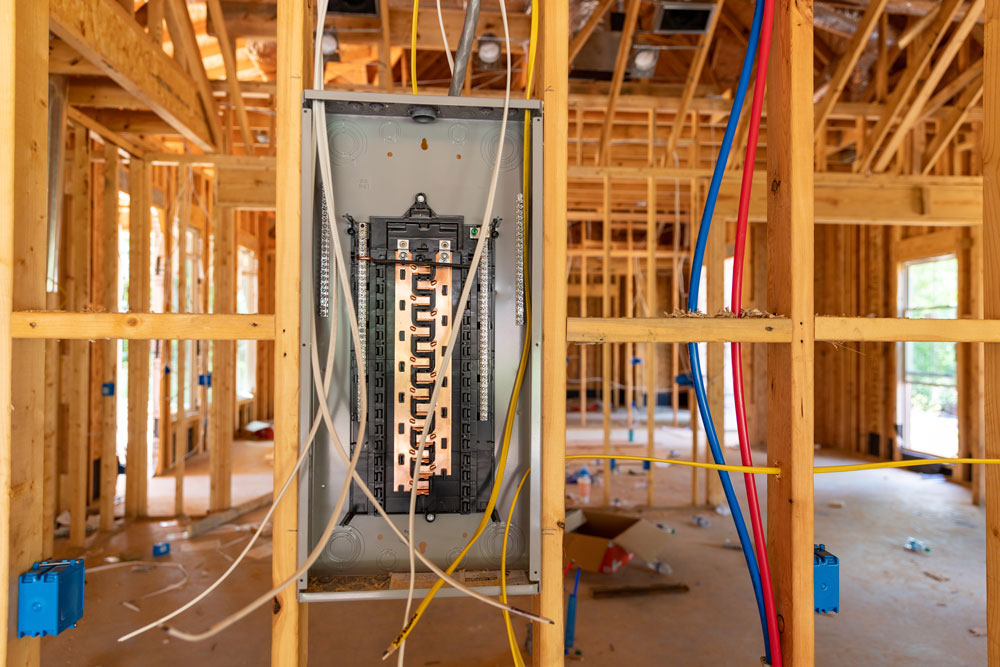
Older homes in Rifle, CO, often have character, established neighborhoods, and electrical systems that may not have been designed for modern household demands. As homeowners add appliances, upgrade heating and cooling equipment, or renovate living spaces, aging wiring can become a safety concern.
Knowing when whole home rewiring is necessary can help property owners avoid electrical hazards, unexpected outages, and expensive repairs.
Quick Answer:Whole home rewiring is typically worth considering when a house has deteriorating wiring, outdated electrical materials, repeated circuit problems, or an electrical system that cannot safely support current power needs. Not every older home requires complete rewiring. A licensed electrician can evaluate the wiring, electrical panel, grounding, and circuit capacity to determine whether targeted repairs or a full replacement is appropriate.
What Rifle Homeowners Should Know
Older homes in Garfield County may have electrical systems installed before today’s common appliances and electronics became standard.
Cold winters in the Colorado River Valley can increase household electrical demand, particularly in homes using electric heating equipment.
Frequently tripping breakers, flickering lights, and warm outlets can indicate electrical problems that deserve professional attention.
Replacing an electrical panel does not automatically correct deteriorating wiring throughout the house.
A professional electrical inspection can help determine whether partial repairs or whole home rewiring provides the safer long-term solution.
In Rifle, electrical upgrades may become especially relevant during kitchen remodels, basement renovations, heating system replacements, and home purchases.
At Always On Electric Inc, we understand that homeowners need clear information before committing to a major electrical project. Our goal is to help property owners understand their options and make informed decisions about electrical safety.
Local Data or Field Observations: Why Electrical Age Matters
Electrical age matters because older wiring methods, deteriorated insulation, and changes in household electricity use can create conditions that warrant professional evaluation. In Rifle and surrounding Garfield County communities, the age of a home is a useful starting point, but the wiring’s actual condition and installation history matter more.
Homes built decades ago may contain older wiring materials, limited branch circuits, or electrical panels that were appropriate when the properties were constructed.
The regional environment also deserves consideration. Western Colorado experiences freezing winter temperatures, seasonal temperature swings, and dry conditions. These factors can affect exterior electrical equipment and exposed connections, although indoor wiring problems are more directly associated with age, installation quality, physical damage, and electrical loading.
These are general electrical considerations, not findings from a documented local inspection or statistical survey.
Local Impact: How Aging Wiring Affects Your Home
Aging wiring can affect electrical safety, appliance reliability, renovation plans, and everyday convenience in older Rifle homes. When circuits were installed for smaller electrical loads, adding modern equipment may reveal limitations that were not noticeable to previous occupants.
Common impacts include:
Electrical safety: Damaged insulation, loose connections, and improper wiring can increase shock or fire risks.
Circuit reliability: Overloaded or defective circuits may trip breakers and interrupt household activities.
Renovation limitations: Kitchen upgrades, finished basements, and additional electrical equipment may require new circuits.
Appliance performance: Electrical faults can interfere with reliable equipment operation.
Long-term planning: Understanding wiring conditions can help homeowners budget for improvements before beginning major renovations.
For households near downtown Rifle or along the Colorado River corridor, evaluating electrical capacity before remodeling can prevent unexpected project changes.
Warning Signs Your Older Home May Need Rewiring
Warning signs that a home may need rewiring include recurring electrical failures, damaged outlets, unusual odors, and visible deterioration. One symptom does not automatically mean the entire house needs new wiring, but repeated or widespread problems should never be ignored.
Watch for these seven indicators:
Frequently tripping circuit breakers: Repeated trips may indicate overloaded circuits, short circuits, ground faults, or equipment problems.
Flickering or dimming lights: Persistent flickering, especially across multiple rooms, can indicate loose connections or other electrical faults.
Warm or discolored outlets: Heat, scorch marks, or melted outlet components require prompt professional attention.
Burning smells: An unexplained burning odor near switches, outlets, or the electrical panel may signal overheating.
Two-prong outlets throughout the home: These can indicate older electrical installations that should be evaluated for grounding and protective upgrades.
Visible wiring deterioration: Cracked insulation, exposed conductors, or damaged wiring should be assessed by an electrician.
Extensive extension cord use: Relying on extension cords for permanent power may suggest the home lacks sufficient outlets or properly distributed circuits.
Homes with several of these conditions may benefit from a comprehensive electrical inspection rather than isolated repairs.
When to Call a Professional Electrician
Call a professional electrician when electrical problems repeat, wiring appears damaged, or an older home cannot safely accommodate its current electrical needs. Rifle homeowners should also arrange an evaluation before significant remodeling or installing equipment that requires dedicated circuits.
Some electrical conditions require immediate action.
If an outlet sparks repeatedly, emits smoke, or smells like burning insulation, stop using it. If it is safe to do so, shut off the affected circuit and contact a qualified electrician. For active fire or immediate danger, leave the building and call emergency services.
Homeowners can safely document which rooms experience problems, note when breakers trip, and identify appliances operating when issues occur.
However, removing electrical panel covers, testing exposed conductors, or replacing concealed wiring should be left to qualified professionals.
Common Local Causes of Electrical Rewiring Needs
The most common reasons older homes need rewiring are deteriorating electrical materials, inadequate circuit capacity, unsafe modifications, and outdated wiring configurations. These conditions may be discovered during inspections, renovations, or troubleshooting in Garfield County properties.
1. Aging wiring and insulation
Electrical insulation can deteriorate over time, particularly when exposed to heat, physical damage, or improper installation conditions. Some older homes may contain wiring methods that require specialized evaluation.
2. Insufficient circuits for modern equipment
A home originally designed for fewer appliances may not have enough dedicated circuits for today’s kitchens, laundry equipment, home offices, and other electrical loads.
3. Previous electrical modifications
Older properties sometimes have wiring changes completed during past renovations. Improper splices, overloaded circuits, or unapproved modifications can create safety concerns.
4. Inadequate grounding or protection
Older wiring installations may lack equipment grounding conductors in certain circuits. Modern electrical work may require updated grounding, GFCI protection, or AFCI protection depending on the installation and applicable codes.
5. Moisture or physical damage
Basements, garages, exterior connections, and other exposed locations can experience moisture intrusion or physical damage. Snowmelt and seasonal weather changes make appropriate protection especially relevant for electrical equipment exposed to the elements.
Prevention and Maintenance for Older Rifle Homes
Preventing electrical problems in older Rifle homes starts with periodic professional evaluations, careful monitoring of warning signs, and avoiding unnecessary circuit overloads. Preventive maintenance cannot reverse deteriorated wiring, but it can help identify problems before they become more disruptive.
Useful steps include:
Schedule an electrical evaluation when purchasing an older property or planning a major renovation.
Test accessible GFCI receptacles using their built-in test buttons according to manufacturer instructions.
Avoid using extension cords as permanent substitutes for installed outlets.
Pay attention to new buzzing sounds, unusual odors, or recurring breaker trips.
Keep electrical panels accessible and clearly labeled.
Have an electrician assess circuits before adding major electric heating equipment or high-demand appliances.
Before winter in the Western Slope region, homeowners using electric heating equipment should make sure the associated circuits and connections are appropriate for the expected load.
Never increase a breaker’s amperage to stop nuisance trips without a professional assessment of the wiring.
Expected Results of Whole Home Rewiring
Whole home rewiring replaces selected or all existing branch-circuit wiring with a properly designed electrical installation that meets the home’s needs and applicable requirements. For an older property, the result can be improved electrical safety, better circuit distribution, and greater flexibility for modern equipment.
A typical project may involve:
Inspecting the existing electrical system and identifying deficiencies.
Developing a wiring plan based on the home’s layout and electrical load requirements.
Determining necessary permits and inspection requirements.
Installing new wiring, receptacles, switches, and protective devices as specified.
Evaluating whether the electrical panel or service equipment also requires upgrades.
Testing completed circuits and completing required inspections.
The project may require access through walls, ceilings, or floors. The amount of disruption depends on the home’s construction, accessibility, and scope of work.
Drywall repairs, painting, and other finishing work should be discussed during project planning so homeowners understand what is included.
Common Mistakes Homeowners Make With Older Wiring
The biggest mistake homeowners make with aging electrical systems is treating repeated symptoms as isolated inconveniences without investigating their causes. In older Rifle properties, temporary fixes can delay necessary improvements.
Mistake
Possible consequence
Better approach
Repeatedly resetting a tripping breaker
An underlying fault remains unresolved.
Have the affected circuit diagnosed.
Replacing outlets without checking wiring
Grounding or wiring defects may remain.
Evaluate the circuit before changing devices.
Installing a larger breaker
Wiring may be exposed to unsafe current levels.
Verify conductor sizing and circuit requirements.
Assuming a new panel fixes all problems
Old branch wiring may still be defective.
Evaluate the complete electrical system.
Starting renovations without an electrical plan
Unexpected wiring work can delay construction.
Include an electrical assessment in the project scope.
The right solution addresses the cause of the problem rather than simply reducing its visible symptoms.
Common Local Scenario: Renovating an Older Rifle Home
A common local scenario involves an older Rifle home undergoing a kitchen renovation that reveals limited circuit capacity or outdated wiring. This is an illustrative example, not a documented customer project.
Imagine a homeowner replacing older kitchen appliances with modern equipment while adding countertop outlets and improved lighting.
During planning, an electrician identifies that the existing kitchen circuits cannot adequately support the proposed layout and appliance requirements.
The homeowner now has two possibilities: replace the affected kitchen wiring and add appropriate circuits, or evaluate whether additional aging circuits elsewhere in the home also warrant replacement.
If the remaining electrical system is in good condition, targeted improvements may be sufficient. If widespread deterioration or unsafe modifications are discovered, a larger rewiring project may be more practical.
This is why an inspection before renovation can be valuable.
Related Service Solutions for Older Electrical Systems
Electrical inspections, circuit upgrades, panel evaluations, and whole home rewiring are related services that address different problems in aging residential systems. Choosing the correct service depends on the condition of the existing installation and the homeowner’s future electrical needs.
At Always On Electric Inc, we can help homeowners discuss their electrical concerns and determine what type of professional evaluation or improvement may be appropriate.
Relevant electrical solutions include:
Electrical inspections: Assess visible conditions, system capacity, and potential safety concerns.
Circuit additions: Provide appropriately designed power for appliances and other equipment.
Electrical panel upgrades: Address panel capacity, condition, or compatibility issues when necessary.
Outlet and switch improvements: Replace damaged devices and incorporate required electrical protection.
Whole home rewiring: Replace extensive outdated, damaged, or unsuitable wiring where a broader upgrade is justified.
Comparing Your Options: Electrical Repair vs. Whole Home Rewiring
Targeted electrical repair is generally appropriate for isolated problems, while whole home rewiring becomes more reasonable when defects are widespread or the existing wiring cannot meet the home’s requirements safely. An inspection helps distinguish between these situations.
Option
Best suited for
Main consideration
Targeted repair
A localized wiring or device defect
Does not address unrelated system problems
Partial rewiring
Specific rooms or circuits needing replacement
Requires evaluation of connections to existing wiring
Whole home rewiring
Widespread deterioration or extensive system deficiencies
Greater cost, planning, and potential wall access
Panel upgrade
Inadequate or defective panel equipment
Does not automatically replace branch-circuit wiring
A homeowner should not assume that the most extensive project is always necessary.
The best choice is the one supported by the home’s actual electrical condition, planned improvements, and applicable safety requirements.
Service Areas Around Rifle, Colorado
Homeowners in Rifle and nearby Garfield County communities can benefit from evaluating older wiring before undertaking major electrical upgrades. Similar considerations may apply to properties around Silt, New Castle, and Parachute, where building age, previous renovations, and electrical demand can influence project requirements.
Local permitting and inspection requirements should be confirmed for the property’s specific jurisdiction.
Cost of Ignoring Outdated Electrical Wiring
Ignoring deteriorating electrical wiring can increase safety risks, prolong recurring power problems, and make future renovations more complicated. The financial impact depends on the type of defect, how widespread it is, and whether it causes additional damage.
For example, delaying repairs to a loose electrical connection may allow continued overheating. Postponing a needed circuit upgrade can also create problems when new equipment is installed.
A full rewiring project represents a significant investment, but delaying necessary electrical corrections is not always the less expensive option.
Homeowners should prioritize documented hazards and use professional recommendations to plan other improvements according to their urgency.
How do I know if my Rifle home needs complete rewiring?
A Rifle home may need complete rewiring when an electrician identifies widespread damaged wiring, unsafe modifications, inadequate grounding, or extensive circuit deficiencies. The age of the house alone is not enough to justify replacement. A professional inspection can determine whether targeted repairs, partial rewiring, or a complete project is appropriate.
How old does a house have to be before rewiring is necessary?
There is no universal age at which a house automatically needs rewiring. Wiring condition, materials, installation quality, and previous upgrades are more important than the construction date. Older homes in Garfield County should be evaluated when warning signs appear or significant electrical changes are planned.
How much does whole home rewiring cost in Rifle, CO?
Whole home rewiring costs in Rifle vary based on square footage, wiring accessibility, circuit requirements, electrical panel condition, permits, and the extent of wall repairs. A reliable estimate requires evaluating the property and defining the work. Homeowners should request an itemized scope that explains included electrical and finishing services.
Can I live in my home during a complete rewiring project?
You may be able to remain in your home during rewiring, depending on the work schedule, electrical shutdowns, and accessibility requirements. Some projects involve extended periods without power or temporary restrictions in certain rooms. Discuss occupancy, dust control, and safety arrangements with the electrician before work begins.
Does whole home rewiring require a permit in Rifle?
Whole home rewiring generally requires appropriate electrical permitting and inspections under applicable Colorado requirements. The exact process depends on the property’s jurisdiction and project scope. Homeowners should confirm who will obtain permits, coordinate inspections, and verify that completed work satisfies applicable electrical code requirements.
Will replacing my electrical panel solve old wiring problems?
Replacing an electrical panel will not automatically solve problems within existing branch-circuit wiring. A new panel may address capacity or equipment concerns, but damaged insulation, improper splices, and inadequate wiring still require separate attention. An electrician should assess both the panel and connected circuits before recommending a solution.
Should I rewire my older Garfield County home before remodeling?
Rewiring before remodeling can be beneficial when existing circuits are inadequate or concealed wiring needs replacement. Opening walls during construction may make electrical improvements easier to coordinate. For an older Garfield County property, an electrical evaluation during the planning stage can help identify necessary work before finishes are installed.
Can cold Colorado winters cause electrical wiring problems?
Cold Colorado winters do not automatically damage properly installed indoor wiring, but winter electrical demand can expose overloaded circuits or existing defects. Outdoor electrical equipment may also face moisture and temperature-related stresses. Homeowners should investigate repeated breaker trips or unusual electrical behavior when seasonal heating equipment is operating.
Is partial rewiring a safe alternative to replacing everything?
Partial rewiring can be a safe and appropriate alternative when the remaining electrical system is in acceptable condition and the new work meets applicable requirements. It is often considered during room renovations or isolated circuit replacements. A professional assessment is necessary to confirm compatibility, grounding, protection, and overall system safety.
Protect Your Older Home With the Right Electrical Plan
Older homes throughout the Colorado River Valley deserve electrical systems that can safely support everyday living. Whether you are purchasing an established property, planning renovations, or investigating recurring electrical problems, understanding the condition of your wiring is the first step.
At Always On Electric Inc, we believe informed homeowners are better prepared to make practical electrical decisions. A careful evaluation can help clarify which improvements are necessary and which can be planned for the future.
Make Your Rifle Home Safer and Ready for Modern Electrical Needs
Get clarity about aging wiring, electrical capacity, and the improvements your home may need.
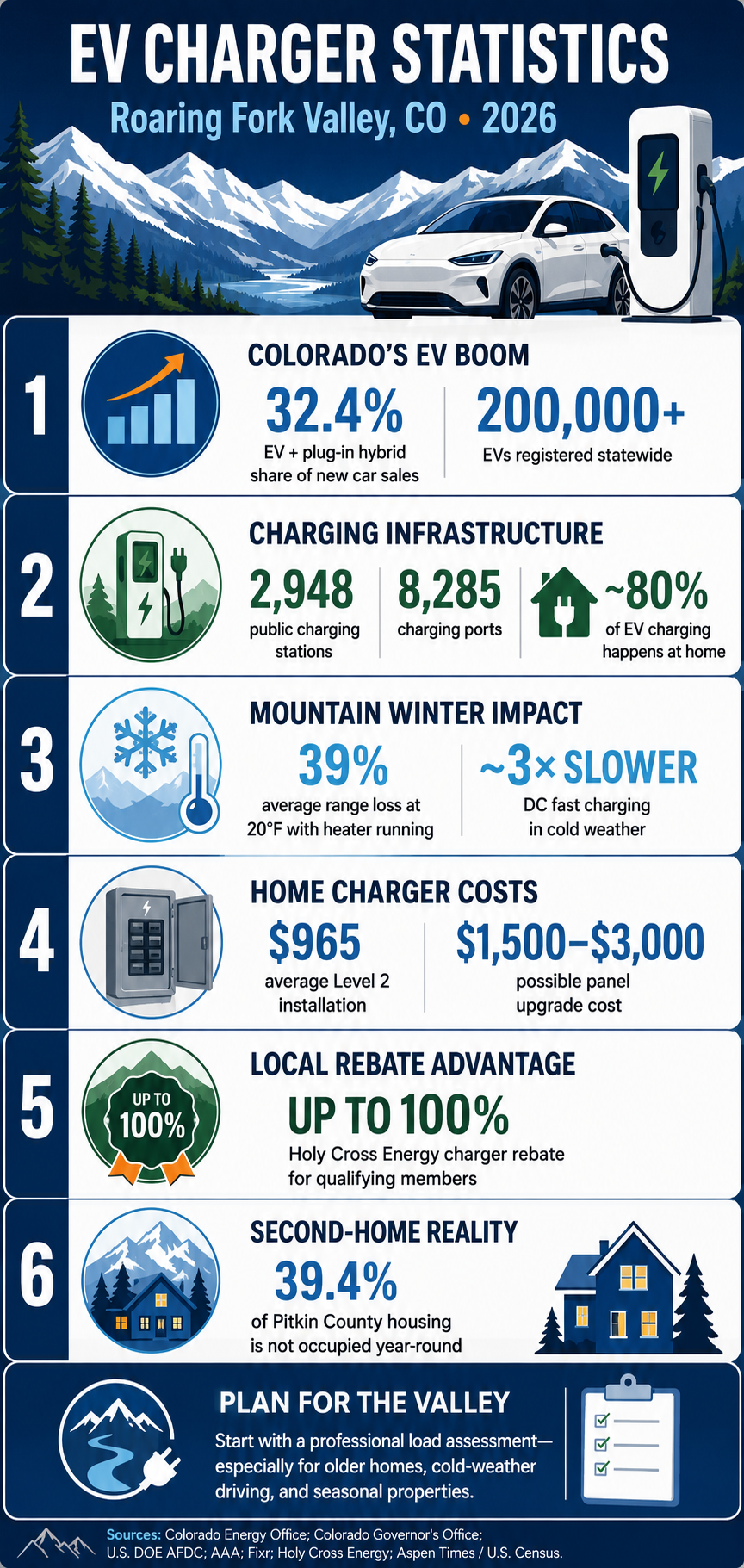
Colorado now leads the nation in EV adoption, with electric vehicles and plug-in hybrids making up a record 32.4% of new car sales in a single quarter (Colorado Energy Office, 2025) and nowhere does that growth collide with reality quite like the Roaring Fork Valley, where sub-zero mornings, 8,000-foot elevations, and a housing stock split between full-time residences and seasonal second homes all shape how, when, and where people actually charge.
For homeowners in Rifle, Aspen, Glenwood Springs, Basalt, and the surrounding valley, understanding the real numbers behind EV ownership, from EV charger installation costs to how much range disappears in a mountain winter, makes the difference between a smooth charging setup and a frustrating one.
Quick Fact
Figure
Source
Colorado’s EV + PHEV market share, Q3 2025
32.4% of new car sales
Colorado Energy Office (2025)
Colorado EVs currently registered statewide
200,000+
Colorado Governor’s Office (2025)
Public EV charging stations in Colorado
2,948 stations / 8,285 ports
U.S. DOE AFDC (2026)
Share of all EV charging done at home nationally
~80%
U.S. Dept. of Energy (2026)
EV range lost at 20°F with heater running
39%
AAA (2026)
Pitkin County housing units NOT occupied year-round
39.4%
Aspen Times / 2020 Census (2023)
Avg. national Level 2 home charger install cost
$965
Fixr.com (2025)
Holy Cross Energy’s Charge at Home charger rebate
Up to 100% of charger cost
ChargePoint / Holy Cross Energy
Colorado’s EV Boom, By the Numbers
Colorado and California led the country in EV registration share in Q3 2025, at 29.4% and 31.5% respectively, of all new vehicle registrations (Alliance for Automotive Innovation Get Connected Report, 2025).
Statewide EV registrations more than quadrupled between 2019 and 2023, climbing from 19,200 to 90,100 vehicles (U.S. DOE Alternative Fuels Data Center, 2025).
Colorado’s EV and plug-in hybrid combined market share hit a single-quarter national record of 32.4% in Q3 2025, driven partly by buyers rushing to use expiring federal tax credits (Colorado Energy Office, 2025).
The state has now surpassed 200,000 total EV registrations, per the Governor’s Office (2025).
New EV registrations fell sharply — down 64% — in the first quarter of 2026 after the federal tax credit expired and Colorado’s own credit was reduced, a reminder that incentive timing still drives a large share of purchase decisions (Colorado Sun, 2026).
Statewide adoption numbers describe a market. What they don’t describe is a mountain town where a large share of the vehicle fleet only shows up seasonally — which is exactly the case in the Roaring Fork Valley, where the housing stock itself skews toward second homes far more than most of Colorado’s Front Range.
Charging Infrastructure: Built for a Statewide Network, Not Always for Mountain Towns
As of 2026, Colorado has 2,948 public EV charging stations with 8,285 total charging ports — 6,606 Level 2 ports and 1,592 DC fast-charging ports — putting it 7th nationally for total charging infrastructure (U.S. DOE Alternative Fuels Data Center, 2026).
At the start of 2025, Colorado had 436 high-speed (DC fast) charging stations with 1,141 ports statewide, and the majority of that infrastructure was concentrated in the Denver metro area (Joint Office of Energy and Transportation, 2025).
Colorado has already awarded nearly $25.6 million in federal NEVI funding to support 246 fast-charging ports along major state corridors, with the final $12 million of its $56.5 million allocation recently approved (Colorado Governor’s Office, 2025).
Nationally, about 80% of all EV charging still happens at home rather than at public stations, according to the U.S. Department of Energy — a figure that matters even more in a valley where public fast-chargers thin out quickly once you leave the highway corridor (U.S. Department of Energy, 2026; Argonne National Laboratory, 2026).
Public charging investment nationally and statewide is real, but it’s built around interstate corridors and metro density. For homes tucked into side canyons or up-valley from Aspen, a dependable public charger simply isn’t always close by — which is exactly why home charging capacity matters more here than in a Denver suburb.
Cold Weather, Elevation & the Mountain EV Charging Penalty
AAA’s 2026 cold-weather study found EVs lose an average of 39% of their driving range and suffer a 35.6% drop in efficiency at 20°F — a temperature the Roaring Fork Valley regularly sees for weeks at a time each winter (AAA Newsroom, 2026).
Winter cold raises EV operating costs by $32.11 per 1,000 miles when charging at home, and by as much as $76.93 per 1,000 miles for drivers relying on public charging (AAA Newsroom, 2026).
A separate large-scale study of more than 30,000 real-world EVs found an average 22% range loss at freezing (32°F), with the worst-performing models (those without heat pumps) retaining as little as 63% of rated range (Recurrent, 2026).
Cold temperatures can slow DC fast-charging speeds by nearly three times, according to Idaho National Laboratory research — meaning a “quick” public charge in January can take substantially longer than the same stop in July (Idaho National Laboratory, cited 2026).
The national conversation about cold-weather range loss is written with a 20°F test day in mind. In Aspen and Glenwood Springs, that’s a mild morning, not a worst case. Homeowners here should plan charging capacity and overnight charge windows around genuinely cold, high-elevation conditions — not the more forgiving averages used in national coverage.
EV Home Charger Costs and Why Older Mountain Homes Pay More
The national average cost for a professionally installed Level 2 home EV charging station is $965, with a typical range of $551 to $1,383 (Fixr.com, 2025).
Broader industry data puts typical nationwide Level 2 installs between $800 and $2,500 once hardware, labor, and permitting are all included (EV Charging industry pricing guide, 2025).
Panel upgrades alone can add $1,500 to $3,000 to a project — a cost driver disproportionately common in homes built before the 1990s, a large share of the valley’s original housing stock (Recharged.com, 2025).
The federal tax credit for home EV charger equipment currently covers 30% of cost, up to $1,000, for eligible homeowners (Argonne National Laboratory, 2026).
The average U.S. residential electricity rate is roughly $0.17 per kWh, though Colorado mountain-town rates and utility programs can shift the real cost of home charging up or down from that baseline (Choose Energy / ComparePower, 2025).
A cost estimate built around a newer suburban home with an underused panel doesn’t hold up in a valley full of 1960s–1980s cabins already carrying heat pumps, hot tubs, and snowmelt systems. For many Roaring Fork Valley homes, the panel — not the charger — is the real cost driver, which is exactly why a load assessment should come before any charger purchase.
Holy Cross Energy: The Local Utility Angle for Roaring Fork Valley EV Charger Rebates
Holy Cross Energy, the member-owned utility serving the Roaring Fork Valley, offers a Charge at Home program that has fully rebated Level 2 home chargers at up to 100% of cost for qualifying members (ChargePoint / Holy Cross Energy case study).
HCE has grown from 175 founding member-families in 1939 to roughly 43,000 members today across the Roaring Fork, Crystal River, Colorado River, and Vail/Eagle River valleys (ChargePoint / Holy Cross Energy case study).
The utility has set a goal of reaching 70% renewable energy by 2030, up from 44% in 2019 (ChargePoint / Holy Cross Energy case study).
Combined residential efficiency and electrification rebates through HCE are capped at 25% of project cost, up to $5,000 per account per year — on top of any charger-specific rebate (Love Electric, 2024).
This is the single biggest advantage Roaring Fork Valley homeowners have: a not-for-profit local utility actively subsidizing home chargers, rather than a distant investor-owned utility with no local rebate program at all.
Not sure if your home qualifies for a charger rebate? Always On Electric, Inc. can help you navigate Holy Cross Energy’s programs.
Second Homes, Vacant Housing & What It Means for EV Charger Demand in Roaring Fork Valley
In Pitkin County, only 60.6% of housing units were occupied year-round as of the 2020 Census, meaning nearly 4 in 10 homes sit vacant much of the year or function as second homes and vacation rentals (Aspen Times reporting on 2020 Census data, 2023).
By contrast, Garfield County — home to Glenwood Springs and much of the down-valley workforce housing — had a 92.8% occupancy rate over the same period, illustrating how differently charger demand behaves upvalley versus downvalley (Aspen Times reporting on 2020 Census data, 2023).
Pitkin County’s population grew just 1.2% between 2010 and 2020, the slowest of the three-county region, while its second-home and short-term rental market has continued to expand (Aspen Times reporting on 2020 Census data, 2023).
A charger installed at a full-time Glenwood Springs residence gets used daily. A charger installed at an Aspen second home may sit unused for months, then face a sudden full-household load during ski season — a very different design problem that a generic national install guide never accounts for.
Summary Table
Statistic
Figure
Source
Year
Colorado EV registration share of new sales (Q3)
29.4%
Alliance for Automotive Innovation
2025
Colorado + California top states for EV registration share
CA 31.5% / CO 29.4%
Alliance for Automotive Innovation
2025
Colorado EVs registered, 2019 vs. 2023
19,200 → 90,100
U.S. DOE AFDC
2025
Colorado EV + PHEV market share (single quarter record)
32.4%
Colorado Energy Office
2025
Total Colorado EV registrations
200,000+
Colorado Governor’s Office
2025
Colorado new EV registration decline, Q1 2026
-64%
Colorado Sun
2026
Colorado public EV charging stations
2,948
U.S. DOE AFDC
2026
Colorado public EV charging ports
8,285 (6,606 L2 / 1,592 DCFC)
U.S. DOE AFDC
2026
Colorado’s national charging-infrastructure rank
7th (3.4% of U.S. network)
U.S. DOE AFDC
2026
Colorado DC fast-charging stations, early 2025
436 stations / 1,141 ports
Joint Office of Energy & Transportation
2025
Colorado NEVI fast-charging ports funded
246 ports / $25.6M awarded
Colorado Governor’s Office
2025
Share of U.S. EV charging done at home
~80%
U.S. Dept. of Energy / Argonne Nat’l Lab
2026
EV range loss at 20°F with heater on
39%
AAA
2026
EV efficiency (MPGe) drop at 20°F
35.6%
AAA
2026
Winter cost increase, home charging
+$32.11 / 1,000 mi
AAA
2026
Winter cost increase, public charging
+$76.93 / 1,000 mi
AAA
2026
Average range loss at freezing (32°F), 30,000+ EVs
22%
Recurrent
2026
Worst-case winter range retention (no heat pump)
63%
Recurrent
2026
DC fast-charging slowdown in cold weather
~3x slower
Idaho National Laboratory
2026
National avg. Level 2 home charger install cost
$965 ($551–$1,383 range)
Fixr.com
2025
Typical nationwide Level 2 install cost range
$800–$2,500
EV Charging industry guide
2025
Added cost for panel upgrades
$1,500–$3,000
Recharged.com
2025
Federal home charger tax credit
30% up to $1,000
Argonne National Laboratory
2026
Avg. U.S. residential electricity rate
~$0.17/kWh
Choose Energy / ComparePower
2025
Holy Cross Energy Charge at Home charger rebate
Up to 100% of cost
ChargePoint / Holy Cross Energy
—
Holy Cross Energy membership, 1939 vs. today
175 families → ~43,000 members
ChargePoint / Holy Cross Energy
—
Holy Cross Energy renewable energy goal
70% by 2030 (from 44% in 2019)
ChargePoint / Holy Cross Energy
—
HCE combined efficiency/electrification rebate cap
25% of cost, up to $5,000/yr
Love Electric
2024
Pitkin County housing occupied year-round
60.6%
Aspen Times / 2020 Census
2023
Garfield County housing occupied year-round
92.8%
Aspen Times / 2020 Census
2023
Pitkin County population growth, 2010–2020
1.2%
Aspen Times / 2020 Census
2023
Frequently Asked Questions
What is the average cost to install a home EV charger in the Roaring Fork Valley?
Nationally, a Level 2 home charger install averages around $965, with most projects falling between $551 and $1,383 (Fixr.com, 2025). In older Roaring Fork Valley homes, a panel upgrade often adds $1,500 to $3,000 on top of that (Recharged.com, 2025) — though Holy Cross Energy’s Charge at Home program can offset or fully rebate the charger cost itself.
How much EV range is lost in cold mountain weather?
AAA’s 2026 testing found EVs lose an average of 39% of driving range at 20°F, a temperature common across valley winters, along with a 35.6% drop in overall efficiency (AAA, 2026).
Does Holy Cross Energy offer rebates for EV chargers?
Yes. Holy Cross Energy’s Charge at Home program has fully rebated Level 2 home chargers for qualifying members at up to 100% of cost, in addition to broader efficiency and electrification rebates capped at 25% of project cost per year (ChargePoint / Holy Cross Energy; Love Electric, 2024).
How many public EV charging stations are there in Colorado?
Colorado has 2,948 public EV charging stations and 8,285 charging ports as of 2026, ranking it 7th nationally for charging infrastructure (U.S. DOE Alternative Fuels Data Center, 2026).
Is Colorado a leading state for EV adoption?
Yes. Colorado posted a record 32.4% combined EV and plug-in hybrid market share in a single quarter in 2025 and has surpassed 200,000 total EV registrations statewide (Colorado Energy Office; Colorado Governor’s Office, 2025).
Methodology & Sources
This report was compiled by the Always On Electric Inc. team using publicly available data from government agencies, utility program documentation, and independent automotive research organizations. Every statistic is attributed to its original source and year; no figures were estimated or fabricated.
U.S. Department of Energy, Alternative Fuels Data Center (AFDC) — federal data on EV registrations and public charging infrastructure by state
Colorado Energy Office / Colorado Governor’s Office — state EV adoption figures, tax credit and rebate program details
Colorado Auto Dealers Association (via Colorado Sun reporting) — quarterly new vehicle and EV registration data
Alliance for Automotive Innovation — state-by-state EV registration and market share analysis
AAA — controlled cold- and hot-weather EV range and efficiency testing
Recurrent — real-world winter range-loss data across 30,000+ vehicles
Idaho National Laboratory — cold-weather DC fast-charging speed research
Fixr.com / Recharged.com / EV Charging industry pricing guides — home charger installation cost benchmarking
Argonne National Laboratory — home charging behavior and federal tax credit details
ChargePoint (Holy Cross Energy case study) / Love Electric — Holy Cross Energy’s Charge at Home program and residential rebate structure
Aspen Times (reporting on 2020 U.S. Census data) — Pitkin and Garfield County housing occupancy figures
Ready to add EV charging to your Roaring Fork Valley home or business? Always On Electric Inc. provides EV charger installation in Roaring Fork Valley across Aspen, Glenwood Springs, Basalt, and the surrounding valley — including load assessments for older homes and guidance on Holy Cross Energy rebates. Reach out today to get your charging project started.
A flickering light, a breaker that keeps tripping, or an outlet that suddenly stops working can seem like a minor inconvenience. In Silt, those symptoms can also point to electrical problems that deserve attention, especially in homes exposed to Western Colorado’s seasonal temperature swings, winter weather, summer storms, and ongoing electrical demands.
The clearest signs that your home may need an electrical repair include frequently tripped breakers, warm or discolored outlets, buzzing sounds, burning odors, recurring flickering lights, damaged wiring, and outlets or switches that no longer work correctly. Some electrical symptoms can be monitored briefly, but signs involving heat, smoke, sparks, or burning smells should be treated as potential safety concerns.
What local homeowners should know
A breaker that trips repeatedly is telling you that something in the circuit needs attention, not simply that the breaker needs to be reset again.
Seasonal heating, cooling, appliances, and other electrical loads can expose weaknesses in electrical systems throughout Garfield County.
Flickering that affects several lights or rooms deserves more attention than a single loose bulb.
Electrical repairs and alterations may involve state electrical permitting and inspection requirements.
Burning odors, sparking equipment, or unusually hot electrical components should not be treated as routine DIY projects.
Why Electrical Problems Matter for Silt Homes
Electrical problems matter for Silt homes because small wiring, circuit, or connection issues can become more serious when they are repeatedly exposed to heavy loads and changing seasonal conditions. Identifying the source early can help homeowners avoid repeated outages, damaged equipment, unnecessary disruption, and potentially unsafe electrical conditions.
Properties in the Colorado River valley experience conditions that can put changing demands on a home throughout the year. Cold periods can increase the use of electric heaters and other equipment, while warmer months bring cooling loads and thunderstorms.
Local housing also varies. A newer home near recent development may experience a very different electrical problem from an older property or a rural home outside town limits. That is why the symptom itself is only the starting point. The circuit, wiring, panel, connected equipment, and condition of the home all matter.
Always On Electric Inc. helps homeowners identify electrical problems and determine the appropriate repair. After that first diagnosis, we can focus on correcting the source rather than simply addressing the symptom.
What Local Electrical Requirements Tell Homeowners
Local requirements reinforce that electrical work is a regulated part of maintaining and improving a home. Town of Silt permit materials state that electrical work must be completed by a state-licensed electrician, and electrical inspections are handled by the State of Colorado inspector.
The Town of Silt provides building permit applications through its Community Development resources, while properties under Garfield County jurisdiction can be subject to county building requirements as well. County permit information also notes that a separate State Electrical Permit may be required for applicable projects.
For homeowners, the practical takeaway is simple: electrical work can involve more than getting the lights back on. Repairs and alterations should be performed with applicable electrical and inspection requirements in mind.
How Electrical Problems Affect Your Home
Electrical problems can affect safety, convenience, appliances, and the reliability of power throughout your home. A weak connection might initially cause occasional flickering, for example, but recurring symptoms can interfere with everyday equipment and indicate a condition that should be diagnosed.
For local homeowners, an unreliable circuit can become particularly frustrating when it serves important equipment during a cold Garfield County winter or a hot summer afternoon. Problems affecting kitchen appliances, heating equipment, cooling systems, home offices, garages, or exterior circuits can quickly disrupt daily routines.
Electrical faults can also produce excess heat. That makes unexplained warmth, discoloration, burning smells, or melting around electrical devices signs that should receive prompt attention.
What Are the Warning Signs You Need an Electrical Repair?
The main warning signs you need an electrical repair are repeated breaker trips, flickering lights, dead outlets, buzzing, heat, burning odors, sparks, and visible electrical damage. The more frequently a symptom occurs, or the more circuits it affects, the more reason there is to have its cause professionally evaluated.
Watch for these specific signs:
Breakers trip repeatedly. A recurring trip can indicate an overloaded circuit, faulty equipment, wiring trouble, or another electrical fault.
Lights flicker or dim unexpectedly. If tightening or replacing the bulb does not solve the issue, the problem may be elsewhere in the circuit.
An outlet feels warm or looks discolored. Unusual heat or darkening around a receptacle or switch should not be ignored.
You hear buzzing or crackling. Electrical components should not normally produce persistent buzzing or crackling sounds.
You notice a burning smell. An unexplained hot-plastic or electrical odor requires immediate attention.
Outlets or switches stop working. A dead device may result from a tripped GFCI or breaker, but recurring failures warrant diagnosis.
You see sparks or damaged wiring. Visible damage, melting, or abnormal sparking calls for professional evaluation rather than continued use.
When Should You Call an Electrician?
Call an electrician when an electrical symptom is recurring, affects multiple devices, involves the panel or fixed wiring, or produces heat, sparks, smoke, or a burning smell. Homeowners can perform simple checks, but electrical troubleshooting should stop before it requires opening panels, altering wiring, or handling energized components.
You can safely check whether a bulb is loose, see whether a GFCI receptacle has tripped, or determine whether a breaker has switched off. You can also unplug a questionable appliance and observe whether the problem stops.
If a breaker immediately trips again, do not keep resetting it. If you smell burning, see smoke or sparks, or find an electrical component that is unusually hot, stop using the affected equipment or circuit when it is safe to do so and seek professional help.
What Commonly Causes Electrical Problems in Local Homes?
Common electrical problems in local homes can come from overloaded circuits, aging components, loose connections, damaged devices, faulty appliances, or changing household power demands. In Silt and surrounding Garfield County communities, seasonal equipment use and the differences between older and newer properties can help reveal weaknesses.
1. Circuit overloads: Plugging too many high-demand devices into one circuit can repeatedly trip a breaker.
2. Loose or deteriorated connections: Electrical connections can become unreliable and may cause flickering, intermittent power, heat, or other symptoms.
3. Worn switches and receptacles: Frequently used devices can eventually loosen, crack, or stop functioning correctly.
4. Faulty appliances: Sometimes the home wiring is not the source. A failing appliance can cause a breaker or GFCI to trip whenever it operates.
5. Changing electrical needs: Renovations, new appliances, EV charging, workshop equipment, or additional heating and cooling equipment can change what homeowners expect from an existing system.
6. Weather-related issues: Storms and exterior exposure can affect outdoor electrical equipment, while changing temperatures can reveal problems that were less noticeable during milder periods.
How Can You Help Prevent Electrical Repairs?
You can help prevent some electrical problems by avoiding overloaded circuits, watching for changing symptoms, testing safety devices as recommended, and scheduling professional attention when something begins behaving abnormally. Seasonal transitions are a useful time for Silt homeowners to pay attention to circuits that will soon carry heavier loads.
Avoid relying on extension cords as permanent wiring. Replace visibly damaged cords and stop using plugs or receptacles that show signs of overheating. Keep electrical panels accessible, and pay attention to which circuit trips if a problem develops.
DIY inspection should remain visual and non-invasive. Removing a service panel cover or attempting to repair fixed wiring exposes you to electrical hazards and should be left to qualified professionals.
What Results Can You Expect From an Electrical Repair?
A proper electrical repair should address the diagnosed cause of the problem and restore reliable operation to the affected part of the system. The exact result depends on whether the problem is a failed receptacle, damaged connection, overloaded circuit, breaker issue, appliance fault, or a larger wiring concern.
Some repairs may be limited to one device or connection. Others may reveal that a circuit, panel component, or part of the wiring needs additional work.
The goal of professional troubleshooting is to determine what is actually failing before recommending the appropriate solution.
What Electrical Repair Mistakes Should Homeowners Avoid?
The biggest electrical repair mistakes are repeatedly resetting breakers, ignoring heat or odors, assuming every problem is a bad outlet, and attempting wiring repairs without the proper knowledge. These approaches can hide the original problem or expose a homeowner to unnecessary risk.
Mistake: Repeatedly resetting a tripped breaker. Consequence: The underlying overload or fault remains unresolved. Better approach: Identify what was operating when the trip occurred and seek help if it continues.
Mistake: Ignoring intermittent flickering. Consequence: A loose bulb may be harmless, but a recurring circuit problem can remain undiagnosed. Better approach: Check the bulb first, then arrange troubleshooting if the symptom continues.
Mistake: Replacing parts until something works. Consequence: The actual electrical fault may remain. Better approach: Diagnose the circuit before choosing the repair.
Mistake: Treating burning smells as normal. Consequence: An overheating electrical component can worsen. Better approach: Stop using the affected equipment when safe and have the source evaluated promptly.
A Common Local Electrical Repair Scenario
A common local scenario is a homeowner noticing that a breaker begins tripping when seasonal electrical demand increases. The breaker may reset normally at first, which makes the issue easy to dismiss, but it trips again when several devices operate at the same time.
The cause could be excessive load, an appliance problem, a circuit fault, or another issue. Instead of repeatedly resetting the breaker, the safer approach is to identify what the circuit serves and have recurring trips diagnosed.
This is an illustrative scenario, not a specific Always On Electric Inc. customer case.
Which Electrical Services Can Solve These Problems?
Electrical troubleshooting and repair services can identify the source of recurring breaker trips, malfunctioning outlets, lighting problems, wiring concerns, and other electrical symptoms. Depending on the diagnosis, the solution may involve repairing or replacing a device, correcting a connection, addressing a circuit problem, or recommending broader electrical work.
We can evaluate the symptoms, isolate the affected portion of the system, and explain the repair options that fit what we find.
Should You DIY an Electrical Repair or Call a Professional?
Simple observations and resets can be appropriate for homeowners, but repairs involving fixed wiring, electrical panels, recurring faults, or damaged components belong with a qualified professional. Knowing where to stop is especially important because a circuit can remain hazardous even when the immediate symptom seems minor.
Changing a light bulb or checking a tripped GFCI is different from replacing wiring or opening an electrical panel. If you cannot identify the cause without accessing electrical conductors or components, professional troubleshooting is the better option.
Where Can Local Homeowners Request Electrical Repair?
Homeowners in Silt and the surrounding Garfield County area can seek electrical repair when recurring or potentially unsafe symptoms appear. Nearby communities along the Colorado River and Interstate 70 corridor, including Rifle and New Castle, face many of the same seasonal electrical demands.
Service availability for a specific address should be confirmed when scheduling.
What Can Happen If You Ignore an Electrical Problem?
Ignoring an electrical problem can lead to repeated outages, damaged components, worsening connections, loss of power to important equipment, or potentially unsafe overheating. Waiting can also make a relatively isolated Silt home electrical issue harder to diagnose if additional components begin showing symptoms.
Not every flicker signals a major problem. The key distinction is whether the symptom is persistent, recurring, spreading, or associated with heat, odors, sparks, or damaged electrical components.
Frequently Asked Questions About Electrical Repair
How do I know if my Silt home has an electrical problem?
Recurring breaker trips, flickering lights, buzzing, dead outlets, burning odors, unusual heat, or visible damage are common indicators of an electrical problem. One isolated symptom may have a simple explanation, but repeated problems or symptoms involving heat and burning should be evaluated rather than ignored.
Why does my breaker keep tripping in Silt, CO?
A breaker may keep tripping because a circuit is overloaded, an appliance is faulty, or an electrical fault is present. Seasonal equipment can change household electrical demand in Silt, so note which appliances were running when the breaker tripped and arrange professional troubleshooting if the problem repeats.
Are flickering lights always an electrical repair issue?
No, a flickering light can be as simple as a loose or failing bulb, but repeated flickering can indicate a circuit or connection problem. If multiple fixtures flicker, the symptom affects several rooms, or changing the bulb does not solve it, professional evaluation is appropriate.
Who performs electrical inspections in Garfield County?
Electrical inspections in Garfield County are performed by the State of Colorado electrical inspector, according to the county’s Community Development FAQ. Homeowners planning electrical alterations should confirm current permitting and inspection requirements for their particular address and project before work begins.
Does electrical work in Silt require a licensed electrician?
Town of Silt residential permit materials state that electrical work must be completed by a state-licensed electrician. Because requirements can depend on the project and property jurisdiction, homeowners should verify the rules that apply before beginning electrical alterations or remodeling work.
Why does an electrical outlet feel warm?
A warm outlet can indicate excess load, a poor connection, or another electrical problem and should not be dismissed if the warmth is significant or recurring. Stop using an outlet that is hot, discolored, melting, buzzing, or producing a burning odor and arrange professional evaluation.
Can Western Colorado storms cause electrical problems?
Storm conditions can contribute to power disturbances and can expose problems with electrical equipment, particularly equipment located outdoors. If a Silt-area home develops persistent electrical symptoms after a storm, avoid assuming the problem will disappear on its own. Recurring issues should be properly diagnosed.
Can I keep resetting a breaker if it trips?
No, a breaker that repeatedly trips should not simply be reset over and over. The trip is a signal that the circuit needs attention. Unplugging a questionable appliance may help identify a simple cause, but recurring trips in a Garfield County home should be professionally evaluated.
Get Reliable Power Back in Your Silt Home
Electrical problems are easier to address when you pay attention to what your home is telling you. Always On Electric Inc. can help local homeowners diagnose recurring electrical symptoms and determine the appropriate next step.
Protect Your Home From Recurring Electrical Problems
We will focus on finding the source of the issue so you can make an informed repair decision.
Winter in Rifle can turn a routine power outage into a much bigger household problem. When temperatures drop and snow, wind, equipment trouble, or other disruptions affect electrical service, homeowners may suddenly be thinking about heat, refrigeration, lighting, communications, and other essential loads.
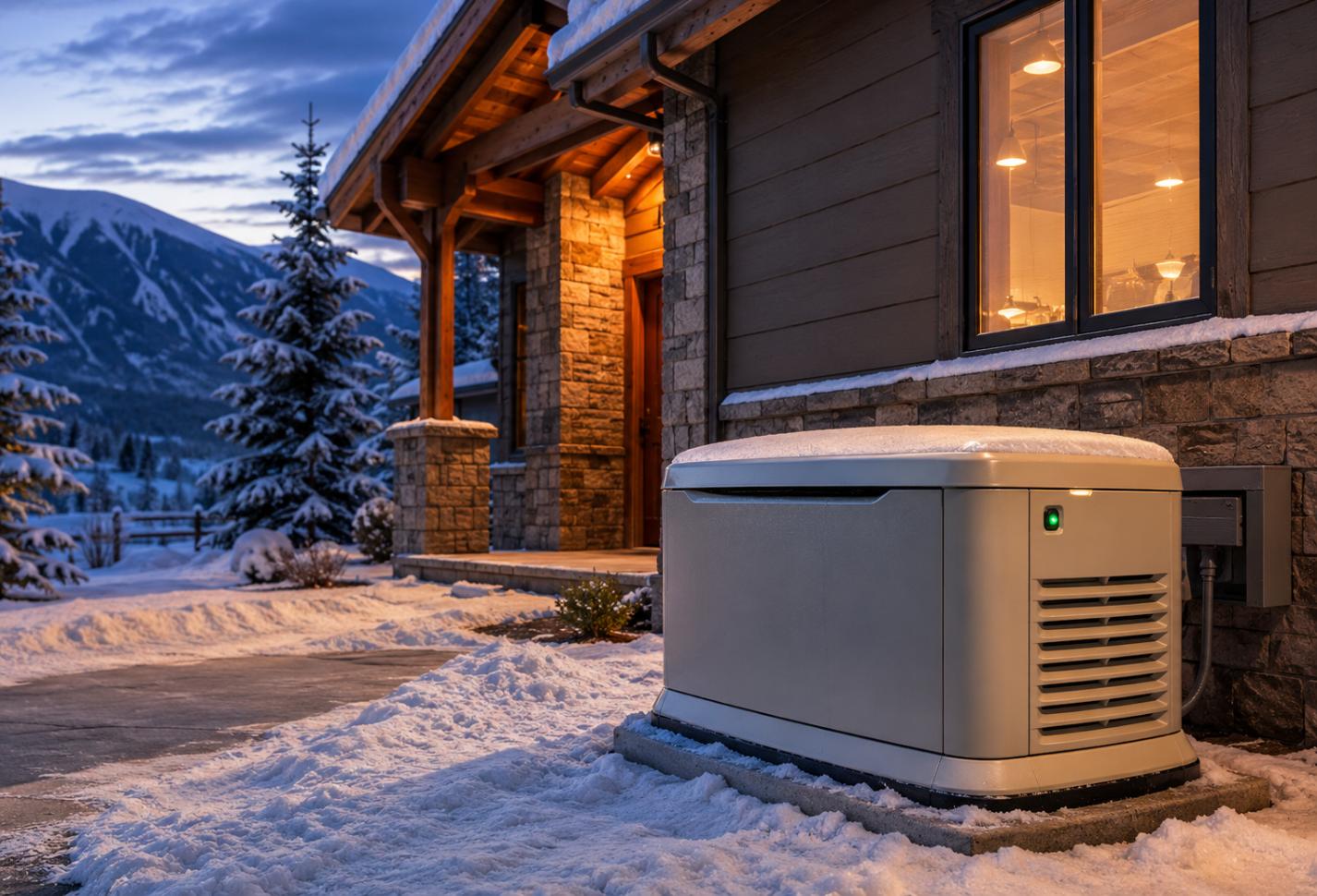
A backup generator can provide power during an outage, but choosing one is not as simple as buying the largest unit available. Rifle homeowners need to think about which circuits actually need backup power, generator sizing, safe placement, fuel, transfer equipment, and professional electrical installation.
Quick answer: A backup generator can be a practical option for Rifle homeowners who want essential electrical systems available during an outage, particularly during cold Western Colorado weather. The right setup depends on your home’s electrical load, heating equipment, fuel availability, and whether you want to power a few critical circuits or most of the house.
What local homeowners should know
A generator should be sized around the electrical loads you plan to operate, not simply the square footage of your home.
Cold weather in Garfield County can make an extended winter outage more disruptive because some homes depend on electricity for heating equipment, controls, pumps, or other critical systems.
Rifle’s own emergency-preparedness guidance warns that outages can result from severe weather, wildfires, accidents, and equipment failures.
Portable and permanently installed standby generators serve different needs and require different planning.
Generator power must be safely isolated from utility power through appropriate transfer equipment.
Why Backup Power Matters in Rifle
Backup power matters in Rifle because an electrical outage during cold weather can affect far more than the lights. Depending on the home, loss of electricity can interrupt heating-system components, refrigerators and freezers, well or circulation pumps, internet equipment, garage doors, and other systems homeowners rely on every day.
Rifle sits in Western Colorado along the Colorado River corridor, with New Castle to the east and communities such as Silt and Parachute nearby. Local properties range from homes close to the center of town to more rural properties across Garfield County, so backup-power priorities can vary considerably.
The City of Rifle’s Rifle Ready emergency-preparedness information specifically notes that utility disruptions can occur with little warning and may be caused by severe weather, wildfires, accidents, or equipment failures. The city also reminds residents that extended outages are not exclusively a winter concern.
Always On Electric Inc helps local homeowners evaluate electrical solutions for their properties. When we discuss backup power, the goal is to identify what a household actually needs during an outage and design the electrical side of the system around those priorities.
What Local Data Tells Us About Power Reliability
Local utility information shows that reliable service does not eliminate the possibility of an outage. Holy Cross Energy reports a 2023 system reliability figure of 99.988 percent, while also reporting that an average member experienced 0.864 outages and 61 total minutes without power that year.
Those systemwide figures do not predict what will happen at an individual Rifle property. They do show why backup power is a preparedness decision rather than an assumption that outages happen constantly.
Holy Cross Energy also identifies separate fire-safety and Public Safety Power Shutoff zones for Parachute/Rifle West and Rifle East/New Castle. The utility explains that weather, equipment failures, transmission issues, wildfire conditions, and other circumstances can still interrupt service.
How Does a Backup Generator Affect a Rifle Home During an Outage?
A properly designed backup generator supplies selected household electrical loads when normal utility power is unavailable. Depending on its capacity and configuration, that could mean maintaining only a few essential circuits or supplying a much larger portion of the home’s electrical system.
Homeowners often prioritize equipment such as:
Heating-system electrical components
Refrigerators and freezers
Selected lighting
Well or water equipment where applicable
Internet and communications equipment
Sump or circulation pumps
Essential receptacles
The important distinction is that “backup power” does not automatically mean “everything runs normally.” A correctly planned system establishes realistic priorities based on available generator capacity.
Warning Signs Your Home May Need a Better Backup-Power Plan
A home may need a backup-power plan when even a relatively short outage would interrupt systems the household cannot comfortably leave without power. That concern becomes especially relevant as colder weather approaches the Rifle area.
Watch for these situations:
Your heating system depends on electrical controls, blowers, pumps, or ignition components.
Your property relies on an electrically powered well or other essential pump.
You have experienced outages that significantly disrupted your household.
You need refrigeration for important household necessities.
Your current portable-generator plan requires unsafe extension-cord arrangements.
You are unsure which circuits could safely operate from your existing generator.
Your household wants automatic backup rather than manually setting up equipment during bad weather.
When Should You Call an Electrician About Generator Power?
Call a qualified electrician when backup power needs to connect to your home’s permanent electrical system. Homeowners can make a list of essential appliances and circuits themselves, but electrical load calculations, transfer equipment, panel connections, grounding considerations, and permanent wiring should be evaluated professionally.
This is especially important in Garfield County homes with larger electrical loads or older electrical equipment. A generator that is too small may not support the intended loads, while an improperly connected generator can create serious electrical hazards.
Never connect a portable generator to a home by improvising a connection through a receptacle. Generator power needs an appropriate method of preventing dangerous interaction with utility power.
What Are the Most Common Backup Generator Considerations?
The most common generator considerations are load size, generator type, fuel, transfer equipment, placement, and the condition of the home’s electrical system. Each one affects whether backup power will work safely and practically when an outage occurs.
1. Electrical Load
Start by deciding what actually needs to remain powered. A refrigerator and several lights require much less capacity than a home attempting to operate numerous large electrical appliances simultaneously.
2. Portable vs. Standby Equipment
Portable generators can provide targeted backup power but require manual setup, proper outdoor operation, and safe electrical connections. Permanently installed standby systems can be configured for automatic operation but involve more extensive equipment and installation.
3. Transfer Equipment
Transfer equipment separates generator power from normal utility power. It is a critical part of a properly connected home backup system.
4. Generator Location
Generators produce carbon monoxide and exhaust. The City of Rifle instructs residents to operate generators outdoors and away from doors, windows, and vents, never inside a home, garage, shed, or other enclosed area.
5. Local Fire Conditions
Backup-power planning in Western Colorado is not limited to winter. Garfield County fire restrictions can also affect operation of internal-combustion equipment. During applicable restrictions, county guidance addresses spark arrestors and fire-extinguishing equipment for generators and similar equipment in undeveloped areas.
How Should Rifle Homeowners Prepare a Generator for Winter?
Winter generator preparation should focus on safe operation, reliable starting, adequate fuel planning, and confirming that the electrical connection is ready before an outage occurs. Testing and inspection are much easier on a clear fall day than during a cold nighttime outage.
Before winter:
Review the manufacturer’s maintenance requirements.
Confirm that the generator starts and operates correctly.
Check that the planned operating location remains clear of doors, windows, and vents.
Make sure snow accumulation will not lead you to operate equipment in an enclosed area.
Review which circuits the system is designed to support.
Have questionable transfer equipment or electrical connections inspected professionally.
Keep outage supplies and flashlights accessible.
DIY preparation should stop where permanent electrical wiring begins.
What Results Can You Expect From a Proper Backup-Power Setup?
A properly planned backup-power system should give you a clear, safe way to supply the circuits selected for outage use. The exact result depends on generator capacity, the transfer configuration, fuel supply, and the electrical demands of your home.
Some homeowners want basic emergency coverage. Others want broader backup for comfort and convenience. Establishing that goal before choosing equipment can prevent both undersizing and unnecessary oversizing.
Common Generator Mistakes Rifle Homeowners Should Avoid
The biggest generator mistakes involve unsafe placement, poor sizing, and improper connections to the home’s electrical system. Avoiding these mistakes is more important than simply purchasing more generator capacity.
Mistake: Buying based only on advertised generator wattage. Consequence: The generator may not match actual starting and operating loads. Better approach: Identify essential circuits and calculate their electrical requirements.
Mistake: Running a portable generator in a garage. Consequence: Carbon monoxide can accumulate and create a deadly hazard. Better approach: Follow manufacturer instructions and operate portable generators outdoors, safely away from openings.
Mistake: Improvising a connection to the house. Consequence: An unsafe connection can expose occupants, equipment, and utility workers to electrical hazards. Better approach: Use properly selected transfer equipment and professional electrical installation.
A Common Rifle Winter Scenario
A common local scenario begins with a homeowner realizing during an outage that several “essential” systems all need electricity at once. The furnace may require electrical power, food needs refrigeration, phones need charging, and a pump or other household equipment may also be important.
Buying a generator after the outage starts makes careful planning difficult. Evaluating those loads before winter gives the homeowner time to decide what should receive backup power and whether a portable or standby approach makes more sense.
What Generator Services Help Solve Backup-Power Problems?
Generator-related electrical services help homeowners safely integrate backup equipment with the circuits and electrical panel that need power during an outage. Depending on the property and selected equipment, that may include electrical evaluation, load planning, transfer equipment, dedicated connections, panel-related work, and installation support.
At Always On Electric Inc, we can help homeowners determine what electrical work is appropriate for their backup-power goals without assuming every property needs the same solution.
Portable Generator vs. Standby Generator: Which Is Better?
Portable generators are generally better suited to homeowners comfortable with manual outage preparation, while standby systems are designed for a more integrated backup-power experience. The better option depends on how much power you need, how quickly you want backup available, and how much manual setup you are prepared to handle.
A portable setup may make sense when only selected loads need temporary power. A standby system may make more sense when automatic operation or broader household coverage is a priority.
There is also another option worth considering. Holy Cross Energy notes that battery storage can provide electricity during grid outages, while solar panels alone generally will not continue powering a home during an HCE outage unless appropriate backup storage is installed.
Backup Power Service Areas Around Rifle
Backup-power planning is relevant throughout Rifle and surrounding Garfield County communities where winter weather and regional outages can affect homeowners. Electrical needs can differ between in-town properties, rural homes, and residences in nearby areas such as Silt, New Castle, and Parachute.
What Can Happen If You Wait Until an Outage?
Waiting until the power is already out leaves little opportunity to safely size, install, or correct a home generator connection. During a winter outage, that can mean losing access to selected heating components, refrigeration, pumps, lighting, or communications until utility service returns.
Rifle’s emergency-preparedness guidance recommends planning for outages before they happen. Generator preparation follows the same principle: decide what matters, understand the electrical requirements, and make sure the equipment can be operated safely.
Not every Rifle home needs a backup generator, but it can be valuable when an outage would interrupt essential electrical loads. Consider your heating equipment, refrigeration, water system, communications, and previous outage experience. The best decision depends on how long your household can reasonably function without those electrical systems.
What size generator do I need for a Rifle home?
Generator size should be based on the loads you want to power, not simply your home’s square footage. An electrician can help identify running and starting requirements for essential equipment. Homes with electric heating equipment, pumps, or multiple large appliances can have very different requirements from homes using primarily gas appliances.
Can I run a portable generator in my garage during a Colorado snowstorm?
No, a portable generator should never be operated inside a garage or other enclosed space. The City of Rifle specifically warns residents to operate generators outdoors and away from doors, windows, and vents because generator exhaust contains dangerous carbon monoxide. Always follow the generator manufacturer’s placement and operating instructions.
Will my solar panels power my Rifle home during an outage?
Solar panels alone generally will not keep an HCE-connected home powered during a utility outage. Holy Cross Energy states that members with solar systems need backup battery storage or another properly configured backup source to have electricity during an outage. System design and equipment determine exactly what loads can remain powered.
Are outages only a winter concern in Garfield County?
No, Garfield County homeowners can face outage risks in multiple seasons. The City of Rifle identifies severe weather, wildfires, accidents, equipment failures, and other events as potential causes. Holy Cross Energy also maintains fire-safety and Public Safety Power Shutoff zones covering the Rifle area.
Can I connect a generator directly to my electrical panel?
A generator connection to a home’s permanent electrical system requires properly designed transfer equipment and electrical work. The system must prevent generator power from being improperly fed into utility lines. Homeowners should have the connection evaluated and installed by a qualified professional rather than improvising a panel or receptacle connection.
Should I test my generator before winter in Rifle?
Yes, testing before winter can reveal starting, maintenance, or connection problems before an outage occurs. Follow the manufacturer’s testing and maintenance instructions, verify the safe outdoor operating location, and confirm which circuits your system supports. Have any concerns involving permanent wiring, panels, or transfer equipment evaluated by an electrician.
Is a battery backup better than a generator for a Rifle home?
Neither option is automatically better because batteries and generators solve backup-power needs differently. Batteries can provide stored electricity without running an engine, while generators may offer another approach to longer-duration backup when fuel is available. Your required loads, desired runtime, existing solar system, property, and budget all affect the decision.
Prepare Your Rifle Home Before the Cold Arrives
A backup generator is most useful when the system has been planned before the lights go out. Understanding your essential loads, selecting appropriate equipment, and establishing a safe electrical connection can make outage preparation much more straightforward for Western Colorado homeowners.
Build a Safer Backup-Power Plan for Your Rifle Home
We can help you evaluate the electrical side of backup power so you know what your system is designed to handle before winter conditions arrive.
Your electrical panel is the distribution point for nearly everything powered in your home, from kitchen appliances and heating equipment to air conditioning and everyday electronics. In Rifle, changing electrical demands can put older residential systems under pressure, especially when homeowners add modern appliances, EV charging, workshops, or other high-demand equipment.
Quick answer: You may need an electrical panel upgrade if breakers trip frequently, lights flicker or dim, your panel shows signs of overheating, you rely heavily on extension cords because you lack circuits, or your existing panel cannot support planned electrical additions. These symptoms do not automatically mean replacement is required, but they are good reasons to have the system professionally evaluated.
What local homeowners should know
Frequent breaker trips can indicate that individual circuits or the overall electrical system are struggling with current demand.
Rifle experiences both hot summer weather and cold winter conditions, so seasonal heating and cooling loads can affect household electrical demand.
Older homes may have electrical systems designed before today’s collection of appliances, electronics, home offices, and specialty equipment became common.
Adding an EV charger, electric appliance, hot tub, workshop equipment, or other major load may require evaluating available panel capacity first.
Burning odors, visible scorching, buzzing, or unusual heat around a panel require prompt professional attention.
Why Electrical Panel Capacity Matters in Rifle Homes
Electrical panel capacity matters in Rifle because a home’s electrical system must safely handle both everyday demand and periods when multiple high-load devices operate at once. Western Colorado’s seasonal temperature swings can increase heating and cooling use, while renovations and newer electrical equipment may add loads an older system was never designed to serve.
Rifle sits in Garfield County along the Colorado River corridor, with nearby communities including Silt, New Castle, Parachute, and Glenwood Springs. Homes throughout this part of the Western Slope vary widely in age, electrical configuration, and how they have been updated over time.
The City of Rifle identifies both Xcel Energy and Holy Cross Energy among the non-city utility providers serving residents. Utility service, however, is only one part of the equation. The equipment inside your home still needs sufficient capacity and properly functioning overcurrent protection.
Always On Electric Inc. can help local homeowners evaluate whether an electrical panel is still appropriate for the way a home uses electricity. From this point forward, we focus on the actual condition and capacity of the system rather than assuming an older panel automatically needs replacement.
Local Data and Conditions That Can Affect Electrical Demand
Local conditions can influence electrical demand throughout the year. National Weather Service climate information for Rifle shows normal late-July high temperatures around 92 to 93 degrees, while the City of Rifle lists a winter design temperature of -2°F in its building data.
That range matters because homes may experience substantial heating or cooling demands at different times of year. The City also identifies Rifle as Energy Zone 5 and lists severe weathering conditions in its building information.
Temperature alone does not determine whether a panel needs replacement. Instead, seasonal loads can expose existing capacity problems that might be less noticeable during milder weather.
How an Undersized or Aging Panel Can Affect Your Home
An undersized or deteriorating electrical panel can affect reliability, convenience, and safety by making it harder for the system to distribute power properly. Homeowners may experience nuisance breaker trips, difficulty adding circuits, or signs of excessive heat when electrical equipment is overloaded or failing.
These problems can become especially noticeable when several loads operate simultaneously. A household might run air conditioning while cooking, doing laundry, charging devices, and operating equipment in a garage or workshop.
The goal is not simply to install a larger panel. The goal is to determine what the home requires and whether the existing service and distribution equipment can safely support those needs.
5 Signs You Need an Electrical Panel Upgrade
The five most common reasons to consider an electrical panel upgrade are recurring breaker trips, flickering lights, signs of overheating, insufficient circuit space, and plans to add substantial new electrical loads. Each deserves professional evaluation because the symptom can have more than one underlying cause.
1. Your Breakers Keep Tripping
Repeated breaker trips can mean a circuit is overloaded, a fault exists, or your electrical system needs further evaluation. A breaker is designed to interrupt power under certain unsafe conditions, so repeatedly resetting one without identifying the cause is not a long-term solution.
Pay attention to when trips occur. If the same breaker shuts off whenever several appliances or devices operate together, tell your electrician exactly what was running at the time.
2. Your Lights Flicker or Dim When Appliances Start
Lights that repeatedly dim or flicker when larger equipment turns on can indicate voltage fluctuations or another electrical issue that should be investigated. Occasional changes may have several causes, so flickering alone does not prove that you need a new panel.
In a Rifle home, notice whether the problem happens when air conditioning, heating equipment, kitchen appliances, or workshop equipment starts. Those details can help an electrician diagnose the underlying problem.
3. You Notice Heat, Buzzing, Scorching, or a Burning Smell
Unusual heat, buzzing, discoloration, scorching, or a burning odor around an electrical panel is a warning sign that deserves prompt professional attention. Do not remove the panel cover or attempt to tighten internal electrical connections yourself.
Electrical panels contain energized components that can remain hazardous even when individual branch breakers are switched off. If you see smoke, sparks, or evidence of an active electrical fire, treat the situation as an emergency and keep a safe distance.
4. Your Panel Has No Room for the Circuits You Need
A panel that lacks appropriate space or capacity for planned circuits may need to be upgraded or otherwise modified by a qualified professional. This situation often becomes apparent during a remodel or when homeowners want to add new equipment.
For example, adding an EV charger, electric range, larger HVAC equipment, hot tub, garage equipment, or other substantial load should involve a proper load evaluation. Simply finding physical space for another breaker does not establish that the electrical service can support it.
5. Your Home’s Electrical Needs Have Outgrown the Existing System
A home may need a panel upgrade when its current electrical demands substantially exceed what the existing system was designed to accommodate. This can happen gradually as homeowners remodel rooms, finish spaces, add appliances, install new heating or cooling equipment, or shift more household functions to electricity.
Older equipment does not automatically require replacement based on age alone. Condition, configuration, capacity, previous modifications, and future electrical plans all matter.
When Should You Call an Electrician?
You should call an electrician when electrical problems repeat, involve heat or burning odors, prevent you from safely using normal household equipment, or arise while planning a major new electrical load. A professional can inspect the system and determine whether the issue involves a branch circuit, connection, breaker, panel, service capacity, or another component.
Homeowners can safely note which appliances are operating when a breaker trips and look at the outside of a closed panel for obvious abnormalities. Internal panel inspection and electrical modifications should be left to trained professionals.
Common Reasons Rifle Homes Need Panel Upgrades
Rifle homes most commonly need panel evaluations because household electrical demand has increased, equipment has deteriorated, remodeling has changed circuit requirements, or homeowners are preparing to install larger electrical loads. The appropriate solution depends on the home’s existing system rather than one universal rule.
Added electrical loads: EV charging, electric appliances, HVAC equipment, hot tubs, and workshops can significantly change demand.
Home renovations: Kitchen remodels, finished basements, additions, and garage conversions may require new circuits.
Aging or damaged equipment: Corrosion, overheating, damaged components, or other deterioration can make continued use inappropriate.
Limited panel space: A full panel can complicate future electrical improvements, although available breaker spaces alone do not determine total electrical capacity.
Previous electrical changes: Homes that have been modified repeatedly over the years may benefit from an evaluation before another major electrical project begins.
How to Reduce Electrical Panel Problems
You can reduce electrical problems by paying attention to recurring symptoms, avoiding overloaded extension cords and power strips, and having planned electrical additions evaluated before installation. Seasonal changes are also a useful time to notice whether certain household loads consistently cause problems.
Before Rifle’s hotter summer periods, pay attention to what happens when cooling equipment operates alongside other major appliances. Before winter, watch for issues that appear when electric heating equipment or other seasonal devices are used more frequently.
Never solve repeated breaker trips by installing a higher-rated breaker without determining whether the wiring and circuit are designed for it. Breaker and wiring sizes must be properly coordinated.
What to Expect From a Professional Panel Evaluation
A professional panel evaluation should determine the condition of the existing equipment, identify visible electrical concerns, review available capacity, and consider the home’s current and planned electrical loads. The findings help determine whether repair, circuit changes, or a complete panel upgrade is appropriate.
If replacement is recommended, the scope may involve more than simply exchanging the panel enclosure. The specific work depends on the existing service, equipment, utility requirements, and applicable permitting or inspection requirements.
The City of Rifle provides building and permit information through its Building Department and uses Cloudpermit for permit applications. Requirements can vary by project, so the applicable process should be confirmed for the specific property and scope of work.
Common Electrical Panel Upgrade Mistakes
The biggest panel-upgrade mistakes are assuming every electrical symptom requires replacement, ignoring recurring warning signs, or making electrical changes without evaluating the complete system. A better approach starts with diagnosis and bases the solution on actual condition, capacity, and planned use.
Mistake: Assuming an old panel automatically needs replacement. Consequence: You may focus on age rather than the actual condition or limitations of the system. Better approach: Have the equipment and household loads evaluated.
Mistake: Repeatedly resetting a breaker without investigating. Consequence: An underlying overload or electrical fault can remain unresolved. Better approach: Track when the problem occurs and arrange an inspection if it continues.
Mistake: Adding a major load without checking capacity. Consequence: The existing electrical service may not be suitable for the new demand. Better approach: Have a load evaluation completed before installation.
A Common Rifle Homeowner Scenario
A common Rifle scenario involves a homeowner planning a renovation or new electrical appliance and discovering that the existing panel has limited room or available capacity. This is not a case study, but it illustrates why panel questions often arise during home improvement projects rather than after a complete electrical failure.
Instead of simply adding another breaker, an electrician can review existing loads, equipment condition, and the requirements of the proposed addition. That information helps determine whether the existing setup can remain or whether an upgrade makes more sense.
Electrical Services That Can Address Panel Problems
Electrical panel inspections, circuit troubleshooting, service evaluations, dedicated circuit installation, and panel upgrades can address different parts of the same underlying problem. The right service depends on whether the issue is damaged equipment, overloaded circuits, inadequate capacity, or preparation for new electrical equipment.
At Always On Electric Inc., we can evaluate the existing system and explain the options that fit the home’s electrical needs.
Choosing between repair and an electrical panel upgrade depends on the cause of the problem, the condition of the equipment, and the home’s future electrical needs. A localized issue may be repairable, while inadequate capacity or broader equipment problems may make an upgrade the more appropriate long-term option.
A repair may make sense when a qualified electrician identifies a specific serviceable problem and the overall panel remains suitable. An upgrade may be considered when the system lacks necessary capacity, equipment condition is poor, or planned improvements require a different electrical configuration.
Electrical Panel Service Areas Near Rifle
Electrical panel needs are not limited to one part of the Colorado River corridor. Homeowners in Rifle and surrounding Garfield County communities such as Silt, New Castle, Parachute, and the greater Western Slope area can encounter similar questions as properties are renovated and electrical demands change.
Service availability for a specific address should be confirmed directly with us.
What Happens If You Ignore Electrical Panel Warning Signs?
Ignoring repeated electrical panel warning signs can allow an unresolved electrical problem to continue and may lead to more frequent outages, damaged components, or increased safety concerns. The level of risk depends on the underlying cause, which is why recurring or heat-related symptoms deserve professional diagnosis.
Waiting can also complicate renovation plans. Discovering insufficient capacity after purchasing a new appliance, EV charger, or other electrical equipment can create delays that could have been identified during project planning.
How do I know if my Rifle home needs a new electrical panel?
Your Rifle home may need a new panel if breakers repeatedly trip, the equipment shows signs of overheating or damage, available capacity is insufficient, or you are adding substantial electrical loads. These signs justify an evaluation, but an electrician should determine whether replacement, repair, or another electrical solution is appropriate.
Does an older electrical panel automatically need replacement?
No, an older electrical panel does not automatically require replacement simply because of its age. Its condition, design, available capacity, installed components, previous modifications, and the home’s current electrical demands all matter. A professional inspection can provide a more useful answer than age alone.
Can Rifle’s summer weather affect my home’s electrical demand?
Yes, hot Rifle summer weather can increase electrical demand when cooling equipment operates frequently. National Weather Service climate normals show late-July daytime highs around the low 90s. Cooling demand combined with appliances and other household loads can make existing electrical limitations more noticeable.
Do I need a panel upgrade before installing an EV charger?
You may need a panel upgrade before installing an EV charger, but it is not automatic. An electrician should evaluate the charger’s requirements, existing electrical loads, service capacity, and panel configuration. Planning this assessment before installation helps Rifle homeowners understand whether their existing system can accommodate the additional load.
Should I worry if a breaker trips once?
A single breaker trip does not necessarily mean your panel needs replacement, but you should identify what was operating when it happened. If the same breaker trips repeatedly, will not reset normally, or trips without an obvious increase in load, stop treating it as a routine inconvenience and arrange professional troubleshooting.
Who provides electricity in the Rifle area?
The City of Rifle lists Xcel Energy Public Service of Colorado and Holy Cross Energy among its non-city natural gas and electric utility providers. The provider serving a particular property should be confirmed for that address, especially when an electrical project may require coordination involving utility-owned service equipment.
Do electrical panel projects in Rifle require permits?
Electrical work may be subject to applicable permit and inspection requirements depending on the project’s scope and jurisdiction. The City of Rifle maintains building and permitting resources and accepts permit applications through Cloudpermit. The exact requirements for a panel or service project should be confirmed before work begins.
Can I inspect my own electrical panel?
You can visually observe the exterior of your closed panel and note breaker trips, unusual sounds, odors, or other symptoms, but internal inspection should be handled by a qualified professional. Removing a panel cover can expose energized components and create serious electrical hazards even when individual branch circuits have been switched off.
Get Your Rifle Electrical System Ready for What Comes Next
Your electrical panel should support the way you use your home now while leaving you prepared for planned electrical improvements. Whether you are troubleshooting repeated breaker trips or preparing for a remodel, we can help you understand your options without assuming replacement is the only answer.
Make Sure Your Rifle Home Has the Electrical Capacity It Needs
Get clear information about your existing panel, current electrical demands, and the upgrades your home may require.